
News Releases
Political Conventions Weekend in Minnesota
Minnesota Report
The DFL Party will is descending on Rochester and the Republicans are heading to Duluth, where politically, and ideologically the two parties are not affiliated with either community as it’s political home. The Democrats will have a virtually lack luster convention, because US Senator Amy Klobuchar (D-MN) will have a cakewalk, as will Lt Governor Peggy Flanagan (DFL-MN) because Congresswoman Angie Craig (D-MN02) is headed directly to the Primary, where she has a significant financial advantage. The question is whether or not the DFL PArty under the leadership of Richard Cardblom will spend any party resources to assist Flanagan is a significant question. If she were to emerge from the Primary she gives Republicans the best shot at being elected to the Governor’s office. She is the weaker candidate between the two, and has played the role as sidekick for Governor Tim Walz (DFL-MN), but is not capable to advancing to super hero status. So no matter, which candidate emerges on the Republican side they have the best shot if Flanagan is the US Senate candidate.
Alternatively, it will be a overwhelming surprise and a definite longshot for any Republican including House Speaker Lisa Demuth (R-13A, Cold Spring) to topple Klobuchar. Although we find it interesting to see Demuth’s superheroine commercial, which is an idea we deployed for Yan Chen (DFL-St Paul) during the 2025 Mayoral race. Looks like they cribbed from us. Now, if Klobuchar taps into her past White Collar Fraud Crimefighting posture she had as a two-term Hennepin County Attorney she has better Fraud Fighting credentials.
The only actual contest that will transpire in Rochester is the State Audtior’s race.
In Duluth, we are not sure who will be endorsed, but we will let you know when we do.
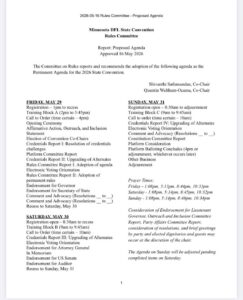
Here is the DFL Agenda
Checks & Balances Query of ChatGPT on the Political Questions of 2026
International, National, Minnesota Report
We decided to put ChatGPT to the test and asked the following question. What are the significant political questions currently underway in Internationally, Nationally and in Minnesota? Create a list and breakout each item.
Significant Political Questions & Issues in 2026
The following are some of the major political questions currently shaping debate and policy discussions internationally, nationally in the United States, and in Minnesota.
International Political Questions
1. U.S.–China Competition & Taiwan
Key Questions
- Will tensions over Taiwan escalate into military confrontation?
- Can the U.S. and China establish “guard rails” to avoid conflict?
- How will economic decoupling reshape global trade?
Why It Matters
This is increasingly viewed as the most dangerous geopolitical flashpoint globally, with concerns over nuclear escalation and military competition in the Indo-Pacific.
2. Wars & Global Security
Key Questions
- Will the wars involving Ukraine, Russia, Iran, and Middle East actors expand regionally?
- Can diplomatic agreements prevent broader international conflict?
- How should NATO and allied nations respond?
Why It Matters
Global instability is reshaping defense spending, diplomacy, refugee migration, and energy security.
3. Artificial Intelligence Governance
Key Questions
- How should governments regulate AI?
- Will AI eliminate large categories of jobs?
- Should nations tax AI-driven automation?
Why It Matters
AI is rapidly becoming both an economic and democratic issue involving labor, misinformation, surveillance, and global competitiveness.
4. Climate Change & Energy Security
Key Questions
- How will nations transition from fossil fuels while maintaining energy stability?
- Will climate adaptation become more urgent than mitigation?
- Can global climate agreements survive geopolitical fragmentation?
Why It Matters
Climate events, supply chain disruptions, and energy conflicts are increasingly intertwined.
5. Democratic Stability & Disinformation
Key Questions
- Can democratic institutions withstand rising polarization and misinformation?
- How should governments regulate social media and AI-generated political content?
- Are authoritarian political movements expanding globally?
Why It Matters
Many governments are confronting declining public trust and rising political extremism.
United States National Political Questions
1. Immigration & Border Enforcement
Key Questions
- How aggressive should immigration enforcement become?
- What powers should federal agencies like ICE have?
- How should “sanctuary cities” respond to federal pressure?
Why It Matters
Immigration remains one of the most polarizing issues in American politics, especially under the administration of Donald Trump.
2. Inflation, Tariffs & the Economy
Key Questions
- Are tariffs helping or harming the U.S. economy?
- How should the federal government address inflation and housing costs?
- Will economic conditions dominate the 2026 midterms?
Why It Matters
Economic concerns consistently rank as the top issue for voters nationwide.
3. Healthcare & Social Programs
Key Questions
- Should the U.S. expand public healthcare?
- How should Medicare and Social Security be funded?
- Will healthcare affordability become a dominant election issue?
Why It Matters
Healthcare costs remain one of the largest financial burdens on Americans.
4. Abortion & Reproductive Rights
Key Questions
- Should abortion protections be federal or state-based?
- How will post-Dobbs state laws affect elections?
- Will reproductive rights continue driving voter turnout?
Why It Matters
Abortion remains a major mobilizing issue across the political spectrum.
5. Democracy, Elections & Political Polarization
Key Questions
- Can trust in elections and institutions be restored?
- How should political misinformation be addressed?
- Is political violence becoming normalized?
Why It Matters
Concerns about democratic stability remain central to American political discourse.
6. Artificial Intelligence & Labor
Key Questions
- Will AI replace white-collar and entry-level jobs?
- Should AI companies contribute to public safety-net funding?
- How should the federal government regulate AI development?
Why It Matters
AI’s impact on labor markets is becoming a major bipartisan policy issue.
7. Gun Violence & Public Safety
Key Questions
- Should federal gun laws be strengthened?
- How should states address rising concerns over shootings and extremism?
- What balance should exist between gun rights and regulation?
Why It Matters
Mass shootings and political violence continue shaping public debate.
Minnesota Political Questions
1. Divided Government in Minnesota
Key Questions
- Can the divided Legislature govern effectively?
- Will bipartisan compromise become necessary?
- How will budget negotiations unfold?
Why It Matters
Minnesota’s closely divided political balance is forcing negotiation between the DFL and Republicans.
2. Immigration Enforcement in Minnesota
Key Questions
- How should Minnesota respond to increased federal immigration enforcement?
- What role should local governments play?
- How should protests and public safety concerns be handled?
Why It Matters
Immigration enforcement operations in Minnesota have generated intense political and public debate.
3. Housing Affordability & Homelessness
Key Questions
- How can Minnesota increase affordable housing?
- Should zoning laws be reformed?
- How should homelessness be addressed statewide?
Why It Matters
Housing costs and homelessness remain major concerns in both the Twin Cities and Greater Minnesota.
4. Education Policy
Key Questions
- How should Minnesota address school funding?
- What role should cultural and social issues play in curriculum debates?
- How should the state address achievement gaps?
Why It Matters
Education continues to be a major battleground involving funding, equity, and political ideology.
5. Public Safety & Police Reform
Key Questions
- What reforms should follow the post-2020 policing debates?
- How should cities balance police staffing with reform efforts?
- What strategies best address violent crime?
Why It Matters
Minnesota remains nationally significant in discussions about policing and criminal justice reform.
6. Climate & Environmental Policy
Key Questions
- How quickly should Minnesota transition toward renewable energy?
- How should the state protect water resources and agriculture?
- What role should green infrastructure play in economic development?
Why It Matters
Minnesota is increasingly investing in clean energy, climate resilience, and sustainability initiatives.
7. Rural vs. Urban Political Divide
Key Questions
- How can Minnesota bridge growing political differences between the Twin Cities metro and rural communities?
- How should agricultural and urban priorities be balanced?
Why It Matters
This divide increasingly shapes elections, infrastructure spending, and statewide political strategy.
A Flurry of Activity at the Diana Murphy United States Courthouse Sans Todd Blanche
National & Minnesota Report
Yesterday, on the 12th Floor in US District Judge Nancy Brasel’s courtroom the declared ringleader of the “Feeding Our Future”, pandemic fraud scheme Aimee Bock, faced sentencing. Prior to the sentencing, attempted to leverage the media and state lawmakers to get a lighter sentence. She leaking protected documents and giving jailhouse interviews blaming others and tried to scapegoat Governor Tim Walz (DFL-MN) and State Attorney General Keith Ellison (DFL-MN) as unfairly targeting her.
All of this was for naught. The result, Bock was sentenced to to 500 months in federal prison and she was also ordered to pay $242 million in restitution.
A gaggle of reporters sat on the ground floor and a podium was set-up for the two sides to make their claims.
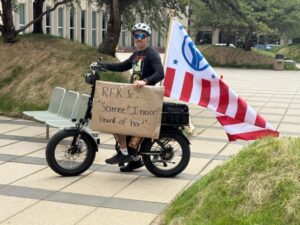
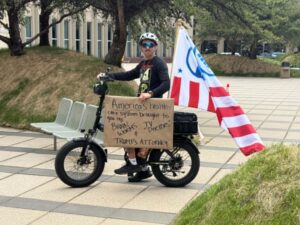
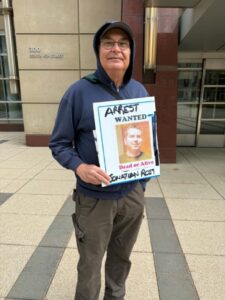
Meanwhile, upstairs on the 6th floor in a press briefing room outside of the US Attorney’s office. The press conference started over 30 minutes late and kicked off with the first Assistant Attorney General for the National Fraud Enforcement Division Colin McDonald. He accounted for an alleged $90 million in the multiple fraud schemes.The entirety of the press conference is available here.
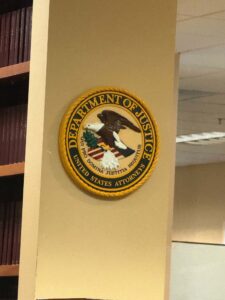
Originally, acting FBI Director Todd Blanche was supposed to attend, but he was busily defending the newly manifested Donald J Trump (R) Slush Fund officially called the Anti-Weaponization Fund (AWF). Its clear this is a problematic issue for Republicans in both the House and Senate, and especially after Trump’s endorsement of Texas Attorney General Ken Paxton (R-TX) over seated US Senator John Cornyn (R-TX), Trump’s successful targeting of US Senator Dr Bill Cassidy (R-LA) and Congressman Thomas Massey (R-KY04) in their respective Primary’s, Capitol Hill is a hornet’s nest and the leadership quickly recessed for the Memorial holiday rather than have discussions over the AWF or the War Powers Act.
We then heard from US Attorney Daniel Rosen who provided the local connection to all of the fraud illegalities which transpired over the course of time.
The assembled heard announcements of additional charges being brought against 15 other individuals who had committed fraud against Minnesotans and all federal taxpayers for abuse of Medicare supported programs for Homelessness, Autism five other programs. In fact, the Housing Stabilization program, which had a limited budget was so imperiled it was shutdown by Governor Walz on October 31, 2025.
McDonald has followed by Health and Human Services Secretary Robert F Kennedy Jr who ticked off inappropriate uses of Centers for Medicare & Medicaid Services (CMS) programs and Kennedy passed over to CMS Administrator Dr Mehmet Oz.
Later Deputy FBI Director Christopher Raia ticked off a number of items including a warrant for a fleeing suspect Mohamed Omar, who evaded law enforcement by jumping from a fourth floor of a building to escape arrest. He also, gave a hat tip to Nick Shirley for his bring to light some of these issues.
Now, Shirley is not truly what he seems to be, he is purported to be a Right-wing Influencer, who supposedly exposed the fraud of Somali daycare’s, but during the arrest during protests in March at the State Capitol, we have learned the police who booked the protesters acknowledged the fact Shirley was brought in and quickly out the backdoor, because he was part of the FBI.
One other interesting question was offered by a self declared “Community Journalist”, who described his own adverse impact from fraud, to which McDonald responded with this being a potential opportunity for him to apply for AWF monies.
With the protests in Minneapolis, Donald J Trump (R) said there were paid protester agitators on the Left, when its clear Shirley was a paid protester agitator on the Right.
Minnesota is Not Alone
McDonald announced the Anit-Fraud Task-force led by J D Vance (R) and He said along with Minnesota New York and Los Angeles are areas of interest. Raia called attention to the Medicare Task-force being built around 15 new attorneys saying, “DOJ are intent on building a Fraud Fighting Apparatus,” and establishing criminal culpability.
Another Issue in the Somali Community Worth Investigating by the FBI
International, National & Minnesota Report
We were interested in getting inside the press briefing, but came up a little short on the list. We did want to ask the following question of Deputy FBI Director Christopher Raia and the US Attorney Daniel Rosen:
During the George Floyd Riots and the cover of night, many Somali-owned businesses were torched. Originally, were had heard these were actions of inter-tribal which stem all the way back to factionalization from Somalia. Now, further information has come forward, and in the light of the call for separation and independence of Somaliland from Somali proper, there is speculation that much of this arson was against the Somalilanders.
If true in any regard it warrants FBI attention.
Now, Donald J Trump (R) might be warm to this idea since Somaliland along with Ethiopia, Indonesia, and Libya were countries who came forward to offer their states for Palestinian refugees from Gaza.
Will the Trump Slush Fund Bring About His Final Downfall?
National & Minnesota Report
When even the Conservative publication the National Review, a stalwart of the Conservative movement started by William F Buckley, is against something advanced by Donald J Trump (R) people with any care for the American Democracy on the cusp of its 250th birthday, should take notice and be enraged. The question is will Republicans in Congress finally get a spine?
The ludicrous claim by $10 million lawsuit by Trump against the IRS for a contractor releasing the his actual worth, rather than the overly inflated claims he makes about his personal wealth, was merely enlightening. Of course this is before the graft and corruption his administration is employing to bolster his net worth while he is in office.
Now, with a $1.7 billion taxpayer funded slush fund to be tapped by his cronies, sycophants and loyalists, who were “wrongly” prosecuted by the Justice Department for crimes, like tax evasion, or better yet, insurrection of the Capitol, is just unconscionable.
This lily-livered coward is a cancer on our nation, and when members of his administration finally see his value as a figurehead and puppet is diminished, hopefully after the mid-term elections, they will exercise Amendment 25 and remove him from office as incompetent to serve. Of course this will result in Vice-President J D Vance (R) to ascend into the Oval Office.
This will be a benefit for Democrats in the 2028 Election, because the Civil War of Pro-Trump allies versus the Ultra-Right, Christian Nationalist who will back Vance will consume this fascist Party from within.
Even if Trump’s Opposition Against Massey Succeeds His Power Dwindles
National, Kentucky & Minnesota Report
Today’s Primary Election in Kentucky’s 4th Congressional District will be telling no matter what the result is. If Donald J Trump (R) gets his way and Congressman Thomas Massey (R-KY04) falls the currency of the consolidation and intimidation factor of Trump’s power increases in Republican ranks but diminishes in the General Electorate. If Massey prevails then the chinks in Trump’s armor show his inherent decline gets more attention.
And why is Massey a target of Trump? Because of his support for the release of the Epstein Files. Which if they ever are fully released will likely show Trump as a pedophile and sexual deviant. This is already something which Vladimir Putin already knows.
Also, Trump’s response to the result will be telling, because if he loses, he will get more unhinged and more incensed. Of course, any acknowledgment, will subject Trump to an increased “loser” stench and adversely impact him going forward.
All eyes are on Kentucky and in this case the House wins no matter what the outcome turns out to be. In this case, the House is the United States of America.
End of 2026 Legislative Session Takeaways
Minnesota Report
The script of the 2026 Legislative Session was written at its onset. The historic tied House at 67-67 the single vote majority in the Senate set the stage for an interesting interaction. Here is the power-sharing agreement. The assassination of the Speaker Emerita Melissa Hortman, her husband Mark and family dog Gilbert left a dark cloud over the House Chamber combined with the shooting at Annunciation Catholic School drew attention once again to the issue of gun violence.
Much of the signed agreement by the four legislative leaders House Speaker Lisa Demuth (R-13A, Cold Spring), DFL House Leader Zack Stephenson (DFL-35A, Coon Rapids), Senate Majority Leader Erin Murphy (DFL-65, St Paul) and Senate Minority Leader Mark Johnson (R-01, East Grand Forks) came to pass. Here is the signed agreement.
Republicans created a session only committee Fraud Prevention and State Agency Oversight Policy to attempt to address the issue, but merely became a partisan blame game charade. The primary legislative responses to fraud actually came from the establishment of the Office of Inspector General and the IT bill, which funds a long-over due update to the state’s computer infrastructure. Although, any computer system changes bring to mind the haunting and clunky roll-out of the MNLARS—by Minnesota IT Services (MNIT) and the Department of Public Safety which, cost tens of millions of dollars and causing massive backlogs, system crashes, and processing delays. So hence, this is what Republicans have to run on in the November election.
On the DFL side, the need for a rescue plan for Hennepin County Medical Center (HCMC) literally stem from the federal cuts to Medicare. HCMC operates as a major safety-net hospital, with approximately 75% of its patients are uninsured or rely on public programs like Medicaid resulting in the fix—part of a $660+ million omnibus health and human services bill—HCMC will receive a $205 million bailout from Minnesota’s state general fund, and the establishment of a $500 Hospital Reserve Fund through 2031.
The acknowledgment of the problems in other hospitals, such as North Memorial, along with rural hospitals across the state are where the Reserve Fund will be applied.
The $1.2 billion Bonding Bill passed and included a provision for a one-year reduction of license tab fees. The implementation date for this is set for January 1, 2027. The opportunity to start this was available on October 1, of this year, but it would have occurred before the November election and become a valuable political points for incumbents, and a non-universal application for vehicle owners. The entirety of a calendar year means an equal disbursement for all tab fee payers.
There is $125 million available for Homestead Tax Credits.
At the time of this article 96 bills have arrived and been signed by Governor Tim Walz (DFL-MN). Here is the list.
The number of bills which passed both bodies and are headed to the Governor for signature are 95. Here is the list.
Many legislators will not return, most notably Speaker Demuth who is running for Governor. In the House there are 10 retirements 7 Republican and 3 DFL. The are 7 House members seeking Senate seats and 5 Republican members and 6 DFLers from either body seeking either a statewide office or a Congressional seat. The entire list of who and what can be seen here.
All-in-all the legislature got it work done on behalf of the citizens of Minnesota. Each side has its political points to use in the election and the ever present specter of Donald J Trump (R) will haunt Republicans and be a banner like a pirate flag for DFLers.
2026, will prove to be a monumental election.
During a Sit-In Staged at the MN House, Two Known Firebrand Legislators Exchange Firey Words
Minnesota Report
The DFL Members of the MN House took an extraordinary action of holding a Sit-In the House Chamber trying to force a vote on gun legislation. Initially, the maneuver sought to get a floor vote to allow SF 4067 (Omnibus Firearms Bill), which had passed 10 days ago, to be brought to the floor. This procedural vote is being prevented clearly due to the existing 67-67 tied body.
House Republican Leader Harry Niska (R-31A, Ramsey) always one whom is quick to goad his opponents, with words chosen to stoke a fire rather than suppress it, has claimed “the bill is not ready”, which is a tactic used to delay action. In turn, rather than be an issue to be resolve on Friday, House Speaker Lisa Demuth(R-13A, Cold Spring) has said the matter is set for 11:00 am on Saturday.
Last Night, Rep Elliot Engen (R-36A, White Bear Lake) and an assembled group of legislators had a heated exchange, in which he claimed Rep Aisha Gomez (DFL-62A, Minneapolis) told him to “go fucking shoot himself.” Literally a case of He said, She said. Since there was more than one person present, this should be able to be confirmed, and if Engen is telling the truth, then disciplinary actions should be taken against Gomez, but if he lied, then corresponding actions should be taken against him.
Those with knowledge about the possible words attributed to Gomez are clear not surprised. She is not one known for her decorum.
Demuth and Niska put out the following statement:
“Minnesota House GOP leaders call on the DFL to remove Rep. Aisha Gomez as chair of the tax committee following an incident tonight
Republican Rep. Elliott Engen wrote on social media that Gomez told him to “go f–ing shoot himself” as Democrats began a sit-in on the Minnesota House floor pushing for a vote on a gun control bill.
“This kind of behavior is unacceptable and it makes every person in this place less safe,” says House Speaker Lisa Demuth.”
Since the call is for removal from a committee, has less value for Engen than it does for Gomez, because she is seeking reelection and he is running for State Auditor. Additionally, because of his decision to join with Rep Walter Hudson (R-30A, Albertville) a leave committee for head to a bar, may mean he has little interest in committee work in the first place.
This type of drama, works for those interested in delay and seeking to bog-down the process as the waning hours of the legislature continue to barrel toward the 11:59 am Constitutionally mandated end of session on Sunday Night.
Trump Use of Godlike Imagery Backfires
National & Minnesota Report
Donald J Trump (R) latest attempt to cloak himself in grand, clearly divine imagery has not produced the awe he may have expected. Instead, it has exposed something far more fragile beneath the surface: a leader increasingly disconnected from the very people who once formed the bedrock of his support. Is this a reflection of his ego outpacing his reality.
For years, he has relied on exaggeration, bravado, and a cultivated persona of strength, but does this just portray the inherent weakness of his artifice? In this recent turn—leaning into imagery and rhetoric that suggests a kind of infallibility or chosen status—has struck a far different chord. Among critics, it has long been dismissed as an over inflated ego. Among former allies, however, it is now being interpreted as something more troubling: a genuine belief in his own myth.
This also could be a further reflection of his slipping into a delusional state of mind.
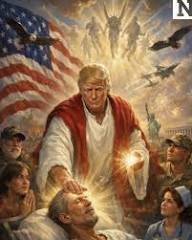
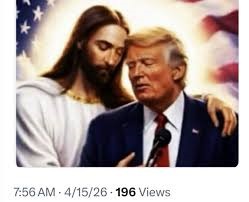
What makes this moment distinct is not outrage from his opponents—that has been constant—but discomfort from within his own ranks. Religious conservatives, once among his most loyal defenders, are increasingly uneasy. For many, the blending of political leadership with godlike symbolism crosses a line into blasphemy. It is one thing to support a flawed leader; it is another to watch that leader appear to elevate himself beyond accountability.
Trump’s schism with all Christians follows his reducing support among Catholics due to his attack on Pope Leo, for his opposition to the War with Iran, and the specifically the concept of this being a “Just War”. Let’s remember he already thought of himself in the Papacy.

This erosion of support comes at a time when external pressures are already mounting. Trump’s economic decisions, particularly his aggressive use of tariffs, have begun to ripple through the broader economy. What was framed as a bold strategy to protect American industry has translated, in everyday terms, into higher prices for consumers. Groceries, manufactured goods, and essential imports have all felt the squeeze. For many Americans, the promise of economic strength has given way to a reality of tightening budgets.
Layered on top of this is a foreign policy landscape that has grown increasingly volatile. Tensions with Iran escalated into open conflict following decisions widely viewed as avoidable. The consequences have been immediate and far-reaching. Oil markets reacted sharply, sending energy prices upward and placing additional strain on households already grappling with inflation.
Perhaps most consequential has been the instability surrounding the Strait of Hormuz—a narrow passage through which a significant portion of the world’s oil supply flows. Any disruption there reverberates globally, and even the threat of restriction has been enough to drive uncertainty and price spikes. The situation underscores how quickly geopolitical decisions can translate into domestic hardship.
Taken together, these developments paint a picture not of dominance, but of overreach. The self-styled image of invincibility begins to fracture when confronted with tangible consequences—rising costs, international instability, and waning trust.
In the end, the use of godlike imagery may prove to be less a show of strength and more a revealing miscalculation. Leadership, particularly in a democracy, depends not on elevation above the masses but on connection with them. When that connection is replaced with self-mythologizing, the distance grows—and once that distance becomes too great, even the most loyal followers begin to step back and reconsider what they are witnessing.
MN House Republicans Attempt to Grandstand and Score Political Points with an Impeachment Push
Yesterday, in the Minnesota House Rules Committee, Republicans continued their now-familiar refrain, centering their arguments on what they describe as widespread FRAUD in state-administered programs. According to Minnesota House Republicans, these programs—designed to assist vulnerable populations—have instead become vehicles for abuse and mismanagement. The messaging is neither subtle nor varied. As the November election approaches, the Republican playbook appears to be unified, disciplined, and singular in focus: FRAUD.
Yet beneath the repetition lies a more calculated political maneuver. Rather than initiating a structured inquiry or engaging in a bipartisan effort to examine the scope of alleged wrongdoing, Republicans attempted to accelerate the process dramatically. What began as a call for discussion quickly evolved into a push for one of the most severe constitutional actions available: impeachment.
Specifically, Republicans sought to advance proceedings against Governor Tim Walz (DFL-MN) and Attorney General Keith Ellison (DFL-MN). The effort, while unlikely to succeed given the current balance of power, was not without purpose. It served as a highly visible platform to reinforce their central campaign narrative and to draw a stark contrast with Minnesota Democratic–Farmer–Labor Party leadership.
The motion ultimately failed on a tied vote—an outcome that surprised few observers. The evenly divided committee ensured that any such effort would stall at this stage. However, the failure itself may be beside the point. In modern political strategy, the act of forcing a vote can be as valuable as winning one. Republicans now have a tangible action to present to their base, while Democrats can frame the move as political theater rather than substantive governance.
Critics of the impeachment push argue that it reflects a broader trend in which complex policy challenges are reduced to campaign slogans. Allegations of fraud in government programs are serious and warrant thorough investigation. But impeachment, they contend, is a tool of last resort—one that demands clear evidence of high crimes or misconduct, not merely political disagreement or administrative shortcomings.
Historically, impeachment in Minnesota is exceedingly rare. The last instance dates back to 1895, when proceedings were brought against a sitting judge accused of being inebriated on the bench, as well as actions involving the State Treasurer. That historical context underscores just how extraordinary such a measure is—and how significant the threshold should be for invoking it.
Supporters of the Republican effort counter that extraordinary circumstances demand decisive action. They argue that failure to act decisively risks normalizing mismanagement and eroding public trust in government institutions. From this perspective, even an unsuccessful impeachment push can serve as a warning signal and a call to accountability.
What is clear is that both parties are positioning themselves for the electoral battle ahead. For Republicans, the focus on fraud provides a sharp, emotionally resonant message aimed at energizing voters concerned about government waste and oversight. For Democrats, the failed impeachment effort offers an opportunity to highlight what they view as partisan overreach and to emphasize stability and continuity in leadership.
In the end, the tied vote in committee may have resolved the immediate question, but it has amplified the broader political conflict. As November approaches, the issue of fraud—real, alleged, and politically framed—will likely remain at the center of Minnesota’s political discourse, with both sides leveraging the moment to solidify their narratives and rally their supporters.
History of MN Impeachments
State Treasurer William Seeger,1873-Impeached for “corrupt conduct” regarding the handling of state funds. He resigned before the trial concluded.
District Judge Sherman Page, 1878-Impeached for official misconduct, including an “arbitrary and violent temper” and mistreating witnesses. He was acquitted by the Senate.
District Judge E. St. Julien Cox, 1881- Impeached for public intoxication while on the bench. He was convicted on seven of twenty articles and removed from office in 1882.
2018 State Fair Polls
Once again, we attended the Great-Minnesota-Get-Together and stopped by the legislative booths in the Education Building. We collected the Annual Polls from the House and Senate. As we have said, this often is an indicator of where the majorities legislative...
NPR Censors Opposition Comments on RCV
The NPR show 1A ran a program on Ranked Choice Voting today, and Checks & Balances Publisher Shawn Towle sought a spot on the panel. When called back by producer Andi McDaniel he was informed the panel was full but could submit a comment through the voicemail...
Corroborating Information on the Knoblach Story
Last year, we published a controversial and disturbing piece on House Ways & Means Chairman, Jim Knoblach (R-14B, St Cloud) regarding claims made by his daughter on her Facebook...
Pawlenty’s Second Deferral (He called us first with the news.)
Originally posted April 20, 2001 When the Vice-President of the United States calls someone who may believe is the person actually in charge, you stop and take notice. So seems to have been with the state House Majority Leader Tim Pawlenty (R – 38B,...
Does Checks & Balances Deserve Credit/Blame for Bachmann’s Political Rise?
Originally published April 04, 2000 Original Title: Another Change in Parties? KSTP talk radio host Jason Lewis openly speculated on his program about the possibility of other members of the legislature leaving the Republican Party for greener pastures with the DFL....
2017 House State Fair Poll
Minnesota Report Official Ballot Minnesota House of Representatives 2017 State Fair Poll Question 1. Should handheld cell phone use be illegal when operating a motor vehicle, except in emergency situations?...
Rep Jim Knoblach Facing Allegations of Sexual Abuse by Daughter
Some disturbing information has come to our attention, alleging Rep. Jim Knoblach (R-14B, St Cloud) engaged in an abusive relationship with his daughter Laura, which if true are damning. We have received screenshots from her personal Facebook page, which has since...
2016 House State Fair Poll
We at Checks & Balances are continuing our tradition of publishing the State Fair Polls found at the State Fair booths in the Education Building. Official Ballot Minnesota House of Representatives 2016 State Fair Poll Question 1. Do you support an increase in the...
Legislative Return/Special Session 2020
Minnesota Report We are hearing the legislature will likely be recalled for Special Session June 12th, which is just before Governor Tim Walz’ (DFL-MN) last peacetime emergency declaration is set to expire. In order to declare another one, he will need to receive...
Alcohol From Restaurant to You
Minnesota Report The House and the Senate have agreed to allow alcohol sales to be purchased from restaurants, during the COVID-19 crisis, but only beer and wine. The problem with this is with liquor stores still open the cost will be higher without an added benefit,...
Caution is the Best Medicine
Minnesota Report As Donald J Trump (R) continues to discuss his preparation and planning, combined with his pressure to open up the United States for business again on May 1st, he does so in a potential conflict with the state’s governors. Here in Minnesota, he will...
What to Expect from the Legislature Today?
Minnesota Report The agenda for the legislature is limited and focused on issues surrounding the COVID-19 Virus and there are a number of ways it is adversely affecting our state. A view of the times for consideration by the House Rules and Legislative Administration...
What the House Looks Like During COVID-19
Minnesota Report Watching yesterday’s proceedings of the Minnesota House of Representatives during the passage of extension of Worker’s Compensation Benefits to First-Responders and other personnel who contract COVID-19 in the course of doing their jobs, was an...
Subscribe to Checks and Balances
