
International, National & Minnesota Report
Donald J Trump (R) is likely to follow through on his threats against Iran, because he doesn’t like being called a “TACO,” Trump Always Chickens Out. His continued bluster and bravado appears to be a response whereby he proves himself. This means he has to prove to others his strength because he is a pathetic little man.
He has a long-documented history of using aggressive rhetoric, intimidation, and personal insults—often described as bullying—to dominate opponents and secure loyalty, a pattern spanning from his childhood to his presidency and business career. His tactics include degrading nicknames, public humiliation, and threatening behavior, designed to knock critics off-balance.
Early Patterns: Dominance as Identity
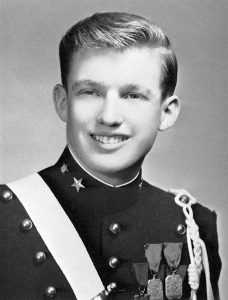
Accounts from Trump’s youth suggest that these tendencies were not developed late in life but were ingrained early. At the New York Military Academy, where he was sent at age 13, contemporaries described him as domineering and at times physically aggressive. Reports of him enforcing discipline among peers and using intimidation to assert control paint a picture of a young person learning that power could be exercised through fear rather than cooperation.
This early environment matters. Military-style schooling emphasizes hierarchy, obedience, and strength—qualities that, when filtered through a personality already inclined toward dominance, can reinforce a worldview where relationships are transactional and hierarchical rather than mutual.

Business Career: Aggression as Strategy
In his business career, Trump refined these instincts into a deliberate strategy. He openly acknowledged using psychological disruption—keeping opponents off-balance—as a negotiation tactic. Former associates and journalists documented patterns of threats, litigation, and verbal pressure designed to overwhelm adversaries.
The so-called “Polish Brigade” case, involving undocumented workers at a construction site, highlighted how power imbalances could be leveraged through intimidation. Critics argued that such behavior was not incidental but central to his approach: create fear, control the narrative, and force concessions.
From a psychological perspective, this aligns with what researchers call instrumental aggression—hostility used not for emotional expression but as a calculated tool to achieve dominance and compliance.
Political Arena: Bullying as Performance
During the 2016–2024 campaigns and throughout his presidency, Trump translated these tactics into political communication. His use of namecalling such as “Crooked Hillary” and “Lyin’ Ted” functioned as branding devices—simple, repeatable labels that reduced complex opponents into caricatures. This is a tactic used to dehumanize an opponent.
One widely criticized moment occurred in 2015 when he appeared to mock a disabled reporter, intensifying concerns about ridicule in political discourse. On social media, particularly Twitter (now X), he used direct, often confrontational messaging to target critics, journalists, and officials.
This behavior served a dual purpose: it energized supporters who viewed it as authenticity and strength, while simultaneously intimidating detractors. The result was what some commentators describe as a “politics of humiliation,” where public shaming becomes a governing style.
Psychological Dimensions: Narcissism and Emotional Development
At the psychological level, Trump’s behavior has often been analyzed through the lens of narcissistic traits. While formal diagnosis is inappropriate without clinical evaluation, many experts point to characteristics such as:
- A strong need for admiration
- Sensitivity to criticism
- A tendency to externalize blame
- A drive to dominate interpersonal interactions
Mary Trump, his niece and a clinical psychologist, has argued that these traits stem from a childhood shaped by Fred Trump, whom she describes as emotionally harsh and intolerant of weakness. In such an environment, vulnerability may be suppressed and replaced with aggression as a defense mechanism.
From a developmental psychology standpoint, behavior that appears infantile or immature—such as name-calling, impulsive retaliation, and difficulty tolerating criticism—can reflect arrested emotional development. These patterns resemble early-stage coping mechanisms, where complex emotional processing is replaced by simple binaries: win/lose, strong/weak, loyal/enemy.
Bullying and Power: Why It Works
Bullying often succeeds because it exploits basic human psychology:
- Fear response: People avoid confrontation when faced with aggression
- Social contagion: Public ridicule can influence group perception
- Cognitive simplification: Labels reduce complexity and shape narratives
Trump’s approach leverages all three. By dominating attention and framing opponents in simplistic, often derogatory terms, he controls the emotional tone of discourse. Supporters may interpret this as decisiveness; critics see it as corrosive.
Sources
The following reputable sources provide deeper analysis and documentation of these patterns:
- PBS Frontline – “President Trump”
- The New Yorker – “Donald Trump’s Politics of Fear
- National Review – Donald Trump’s Business Career Has Been One of Bullying Ordinary Citizens
- The Atlantic – “The Mind of Donald Trump” by Dan P. McAdams
- American Psychological Association (APA) – Research on narcissism and leadership
- Mary L. Trump – Too Much and Never Enough: How My Family Created the World’s Most Dangerous Man
- Gwenda Blair – The Trumps: Three Generations of Builders and a Presidential Candidate
Conclusion
Trump’s use of bullying tactics is not incidental—it is foundational to his personal and professional identity. From early life experiences to high-stakes political arenas, he has consistently relied on aggression, ridicule, and intimidation as tools of control. Psychologically, these behaviors suggest a pattern rooted in dominance-seeking and emotional defensiveness, often manifesting in ways critics describe as immature.
Whether interpreted as strategic or corrosive, the broader implication is significant: when bullying becomes normalized in leadership, it reshapes not only political discourse but societal expectations of power itself.